The mechanosensory effect
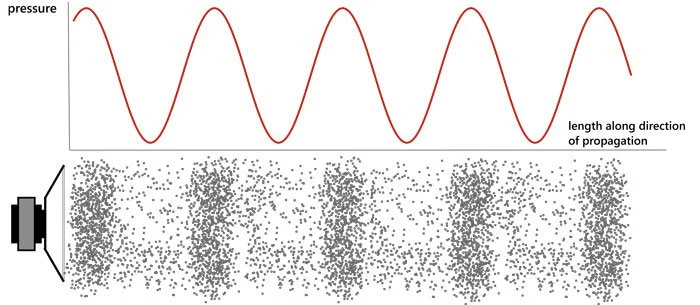
Sound is a pressure wave
An interesting study reveals an unexpected effect on the cellular structure of our cells by sound waves.
The cells that all animals, plants, fungi, seaweed, and many unicellular organisms are made of are eukaryotes. Eukaryotic cells have a membrane-bound nucleus.
These cells are equipped with multiple systems and perceive a wide range of mechanical stimuli from the environment. these systems refer to the biological ability of organisms to detect and respond to mechanical stimuli such as touch, pressure, vibration, sound, and stretch by converting physical forces into electrical or biochemical signals.
Stimuli of all kinds informs us on how to behave in the world we live in, two senses, hearing and touch are “mechanosensory”, they rely on direct pressure (touch) and indirect (sound). Our body, made out of cells and bones, receive these pressure messages. It turns out that they might influence the comportment of our genes. However, cell-level responses to an audible range of acoustic waves, which transmit feeble yet highly frequent physical perturbations, remain largely unexplored.
The study consisted of sound emission for two hours, and then again for 24 hours. After two hours, 42 differentially expressed genes were identified to be activated; and after 24 hours, there were 145 genes identified.
Adipocyte cells, which are specialized cells primarily designed for energy storage, insulation, and metabolic regulation, exhibited prominently high sound responses, by continuous or periodic acoustic stimulation. Collectively, these findings redefine acoustic waves as cellular stimulators and provide new avenues for applying acoustic techniques in biosciences.
Physical contact, like touch, causes a much higher body sound transmission than external audible sound. Both simulation (direct “touch” and indirect “sound”) have revealed the ability of hard and soft body tissues to transmit pressure by several centimetres, suggesting that, under physiological conditions, the sound pressure transmitted to cells in living tissues is in several ranges of magnitude. However, sound and acoustic waves have not been extensively investigated as sources of cellular stimulation.
A new study investigates how cells respond to the physiological range of acoustic irradiation that defines the biological significance of sound as a mechanical stimulation and uncovers the fundamental relationships between life and sound.
Gene annotation analysis revealed various molecular, cellular, and body/tissue-level activities affected by acoustic stimulation. In addition to the known mechanosensitive activities, various pathways and processes were identified that may be unique responses to acoustic stimulation.
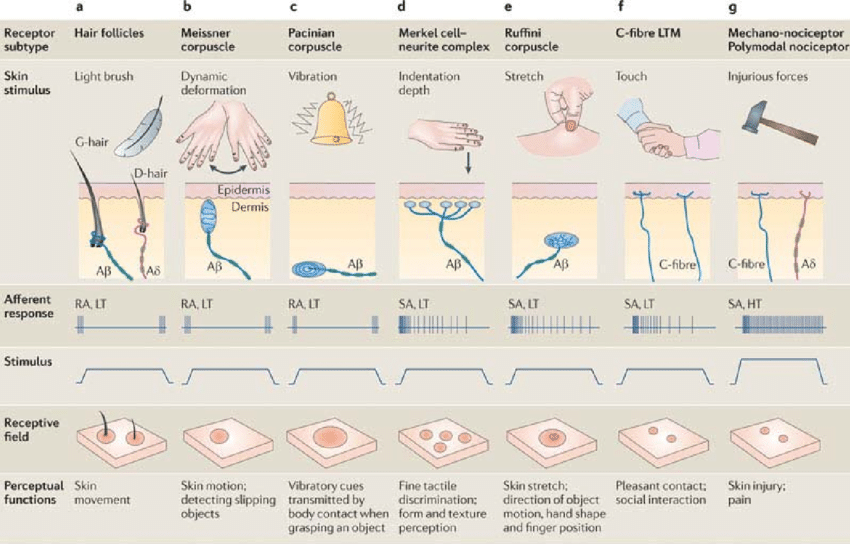
Various mechanosensory pathways
The generation of acoustic waves in water inevitably accompanies fluid movement. Although it is impossible to experimentally assess the sole effect of the compressional wave free of shear stress caused by the flow, comparison of the cell responses for 440 Hz and 14 kHz sound waves strongly suggests that many of the cellular responses observed in this study were induced by the compressional waves. When comparing acoustic waves with the same intensity, the amplitude of particle displacement of the sine wave is inversely proportional to the sound frequency. Thus, under the same output, a 440 Hz sound wave will have a 32-fold larger particle displacement amplitude than that of a 14 kHz sound wave and generate much larger shear stress for the cells. Therefore, cell responses caused by the shared stress are expected to be much higher at 440 Hz than those at 14 kHz. But the correlation analyses of gene responses in response to 440 Hz and 14 kHz sound waves revealed dispersed distribution, with approximately half of genes showing stronger response to 14 kHz stimulation than to 440 Hz stimulation
The effects of the different waveforms may be linked to different frequencies. Triangular and square waves contained more high-frequency overtone series than the pure sine wave; therefore, cell responses to triangular or square waves may include the effect of high-frequency waves. Comparison of the gene responses to 440 Hz and 14 kHz sound waves revealed higher correlation for square and triangular waves than sine wave suggesting a unique feature of acoustic stimulation that differs from other mechanical stimuli. Considering the infinite sound pattern with both temporal and compositional variations, acoustic stimulation may induce diverse cellular responses and, therefore, is an intriguing tool for cell manipulation such as living tissue engineering, regenerative medication, artificial tissue culture and related biotechnology industry.
Sound exists universally in the material world; thus, life forms are exposed to this physical energy from their inception. It is, therefore, not surprising that living organisms develop systems to utilise sound as an environmental stimulus and optimise activities at the cellular level. Our findings reveal the nature of cells that sense acoustic information to orchestrate inner activities and mark the beginning of research focusing on the fundamental relationship between life and sound.
What do these findings demonstrate on the effect of music on our genes? It seems that these studies show that acoustic sounds do affect us at the cellular level. Frequencies at the hearing level have a demonstrative effect on the expression of our genes. Anyone going to a rock concert, night club, movie theater, or has felt the strong vibrations emanating from a loud car audio system can feel these mechanosensory effects - mainly due to the low part of the sound spectrum. But interestingly enough, higher frequencies that we can hear but cannot feel do have as strong an effect on our cells. Different styles of music use a different range of frequencies at various ratios to one another. Can these effects be considered when composing, mixing and mastering, since they have a regenerative effect on us? Could being attracted to a specific type of music be our genes expressing to us what sound environment to seek in order to optimize our well being?
Evidently there is still a lot to discover, but as we learn more about the fundamental place that sound waves take in our world and cosmos, it is good to be mindful of its importance in our lives.